
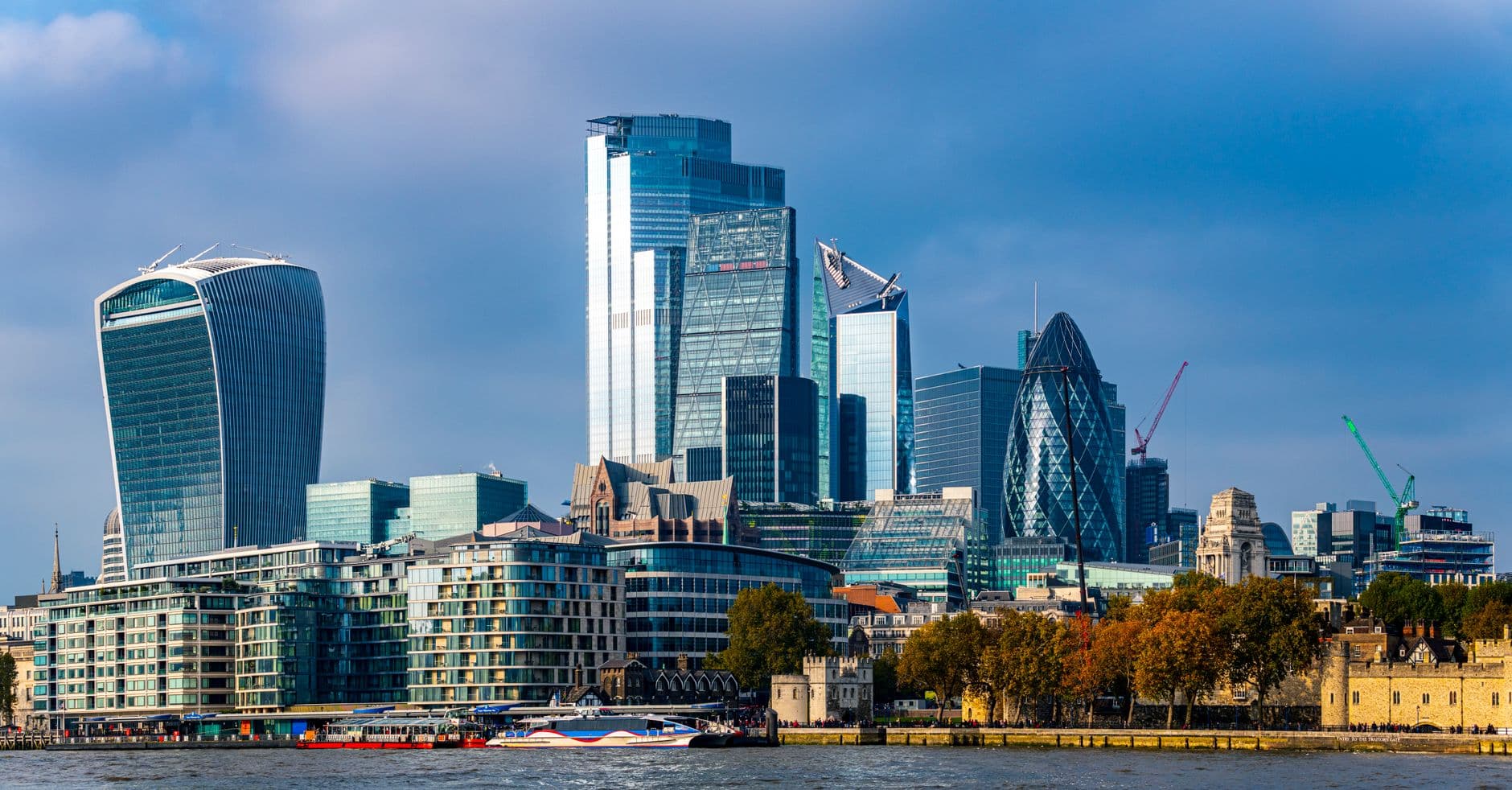
London · Greater London
Software, web, mobile & digital marketing for London businesses
London is not one market but a dozen trading at once. Insurance in the Square Mile, banks and their vendors at Canary Wharf, the AI tenants taking space around King's Cross, product companies still clustered near Old Street, post-production in Soho, the jewellery trade in Hatton Garden. Each of them buys software differently, and we work across all of them. Two facts shape every London engagement: senior engineers cost more to employ here than almost anywhere in Europe, and organic search is contested by companies with budgets most of our clients will never have. We are registered in Glasgow, not London, and we would rather put that on the page than let you discover it later.
Background photo by Samuel Sweet on Pexels
Working with London businesses
The City and Canary Wharf concentrate regulated buyers, and their procurement shows it — data residency questions, penetration-test evidence, professional-indemnity cover and a security questionnaire before anyone writes code. Around Lloyd's, broking and managing-agent businesses still run large parts of placement, binder administration and claims through spreadsheets and email, which is usually where the useful work sits. West of the City the picture inverts. Soho's post-production and advertising firms need asset pipelines, review-and-approval workflows and rights tracking. Hatton Garden jewellers, the food manufacturers and wholesalers on the Park Royal estate, and traders at New Spitalfields and Billingsgate are small, margin-sensitive operations with real stock and pricing problems and almost nothing built for them. Harley Street clinics need booking, records and consent handled properly. Our London work spans that whole range rather than one slice of it.
Why London businesses work with us
A London business works with us for one of two reasons. Either the number matters — a content-managed website at £9,000–£25,000 or a web application from £12,000 buys more here than the same money spent through a central London agency paying EC2 rent — or the internal option has stalled, because the developer you need is being bid for by a bank two streets away. What you get instead is a small senior team, a fixed written scope, and someone who will tell you when the thing you asked for is not the thing you need. We have no London office to justify, so we have no reason to inflate scope to fill one.
How we work at this distance
Everything runs remotely by default: a weekly video review with something you can click, a shared board you can read without asking us for an update, and one named contact rather than an account manager relaying messages. For kickoffs, discovery workshops and milestone reviews on larger engagements we travel down. Glasgow Central to Euston is a direct West Coast Main Line service of roughly four and a half hours, and a flight from Glasgow is about an hour and a quarter, so a same-day return to a London meeting is straightforward. We work UK hours, invoice in pounds sterling, and are registered at Companies House.
The London market, honestly
The London cost base is the practical argument for working with us. A dedicated developer is £3,200–£6,500 per developer per month, which sits against a London salary plus employer costs, recruitment fees and a desk, in a market where the banks and the larger fintechs set the price. On search, London head terms are contested by firms spending more per month than some of our clients spend in a year, so we usually begin with borough and service-plus-sector queries where intent is higher. An SEO audit is from £1,200 and an SEO programme is £800–£2,500 per month. We do not promise rankings, in London least of all.
Popular London searches
A development company near you
Searched for a “software development company near me” around London? We work with London and nearby businesses as a dedicated remote team — Glasgow-registered, on UK hours, and on site for the meetings that need it.
Talk to us about LondonWhat London industries actually need built
Not a list of services — the specific gap we most often find in each of these sectors here.
Insurance and the Lloyd's market
Broking and MGA workflows are still largely spreadsheet-shaped: schedules rekeyed between systems, bordereaux assembled by hand, claims tracked in inboxes. What is usually missing is one record per risk with an audit trail, validation at the point of entry, and reporting that does not depend on one person's local file.
Fintech and payments
These teams rarely need a platform built from nothing; they need capacity and a second opinion. The common work is integration against providers, reconciliation that survives partial failures, identity and onboarding journeys, and the evidence pack a bank's own vendor review will ask for before signing.
Legal and professional services
Client onboarding in City and West End firms is still paper-heavy — engagement letters, conflict checks and identity documents chased by email. Document extraction, matter dashboards and a portal where a client can see status without ringing a partner are where the hours come back.
Media, advertising and post-production
Soho's studios and agencies move large files under deadline. The gap is operational rather than creative: ingest and proxy pipelines, versioned review and approval, rights and usage expiry tracking, and billing tied to recorded time rather than a spreadsheet reconstructed at month end.
Wholesale, markets and independent retail
Park Royal food businesses, New Spitalfields traders and Hatton Garden workshops run on customer-specific pricing, credit accounts and stock that moves faster than the paperwork. Our point-of-sale line covers trade pricing, account limits and grocery or fashion stock handling without commissioning a custom build.
What we build for London clients
Every service below is available to London and Greater London businesses.
Software Engineering
AI & Automation
Design & Experience
Growth & Marketing
Cloud & Infrastructure
Dedicated Teams
London questions
Including whether we actually have an office here — we do not, and we would rather say so.
No. Our registered address is 3/2, 4 Buccleuch Street, Glasgow G3 6SL, and London clients are served remotely with travel for meetings where it makes sense. We say so plainly because it is checkable, and because not carrying central London overheads is part of why our pricing is what it is. If you need a supplier in your building at short notice every week, we are the wrong choice.
Usually lower for the same scope, because our cost base is not floor space in EC2 or Canary Wharf. A marketing website is £4,500–£9,000, a content-managed website £9,000–£25,000 and a web application from £12,000. The comparison that matters is not day rate but what each quote excludes — third-party licences, content, migration and post-launch support are where two apparently similar London quotes diverge.
Yes, for the meetings where it changes the outcome: kickoff, discovery, milestone reviews and anything involving your compliance team. Glasgow Central to Euston is a direct West Coast Main Line service of roughly four and a half hours, and a flight from Glasgow is about an hour and a quarter, so a London day trip is routine rather than an expedition. Weekly progress reviews stay on video, because that is more useful more often.
Usually. We handle UK GDPR data processing agreements, UK-only or EU-only hosting, penetration-test remediation, role-based access control and the security questionnaires that City and Canary Wharf clients send their suppliers. Where a questionnaire asks for a certification we do not hold, we tell you at the first call rather than after you have committed budget to us.
Brutal, and it changes the strategy rather than just the effort. Generic London head terms are often not winnable on a sensible budget, so we target borough-level and service-plus-sector queries first, fix the technical foundations, then work toward the harder terms. An SEO audit is from £1,200 and an SEO programme is £800–£2,500 per month. Nobody can promise you rankings, and anyone who does is selling something else.
It is common work. We start with a paid discovery covering how risks, endorsements, bordereaux and claims actually move today, including the informal steps nobody documented. Then we usually replace the highest-friction part first rather than the whole estate, so you get one authoritative record with validation at entry and a full audit trail without committing to a two-year programme.
Yes. Our point-of-sale line covers retail, grocery, fashion, cafes and restaurants, fast food, repairs and wholesale, including trade pricing and credit accounts. For central London sites the two things that matter most are trading offline when the connection drops and delivery-platform orders arriving in one sequenced kitchen queue instead of on three separate tablets behind the counter.
Also serving
Other UK cities
Building something in London?
Tell us the problem. We will tell you what would fix it, roughly what it costs, and whether we are the right people for it.
Get in touch